Friday, October 30, 2020

Happy Birthday Senator Bill Raggio


William John Raggio, Jr. was born in Reno, then the picturesque “City of Trembling Leaves,” on  October 30, 1926—just a few hours short of Nevada Day.  He was a fourth-generation Nevadan and descendant of immigrants from northern Italy who had arrived penniless; but, by hard work and thrift, saved enough to become successful landowners. These values, along with an abiding respect for the country that provided them such a golden opportunity, were passed along and instilled in Bill Raggio, whetted through the Great Depression and a World War that encompassed his early life.

By the 1960’s, Raggio was nationally recognized as a brilliant and gutsy district attorney, fighting endemic corruption in the local city government and police department, and personally prosecuting some of the most heinous crimes ever committed in Nevada. His lively confrontations with local brothel owner Joe Conforte over the years became the stuff of legend. But all of this came at a personal cost, with the lives of Raggio and his family disrupted by threats of violence to the point where trusted police sentries kept watch, often for weeks at a time, at the Raggio home on Robin Street each night and often escorted his three children to school for their protection.

After an unsuccessful run for the U.S. Senate, Bill Raggio was elected to the Nevada State Senate in 1972.  Once there, he spent long hours learning his job, impressing colleagues with his dedication and work ethic, and was soon chosen as Senate Minority Floor Leader. As a member of the Senate Committee on Finance, Raggio carefully studied the intricacies of the state budget and became widely admired for his prodigious intellect and extraordinary retention, even among those who did not share his conservative political views.

In 1987, when Republicans won a majority in the Senate, Bill Raggio became Floor Leader and Chair of the Finance Committee, guiding that governing body over most of the next two decades with a willingness to listen and consider the needs and opinions of others. His charisma, patience and sense of fairness—balanced, when he felt it necessary, with an intimidating presence and an occasional calculated fit of temper—steered colleagues to acceptable compromises and kept the Legislature functioning.

His longevity in these legislative posts was all the more remarkable because of the dramatic political power shift during his tenure to Clark County. Despite southern Nevada legislators comprising a significant majority of seats in the Senate, northerner Raggio kept his leadership position largely due to his cleverness and experience, which allowed him to play the political game like an accomplished chess master—always several moves ahead of his rivals. During this time, he often was referred to, by both admirers and critics alike, as "Nevada's Shadow Governor."

Travelers arriving at the Reno-Tahoe International Airport invariably pass by the bronze bust of Senator Raggio, smiling back at them from a pedestal behind a velvet cord.  Raised lettering on the wall behind the bust proclaims him to be “Father of the Airport Authority.” His success as the driving force in establishing that governmental entity, which broke the stranglehold of longtime, local monopolies; revolutionized the tourist industry in northern Nevada, and was just one of his many significant accomplishments in shaping the State.

Of all those accomplishments, he was most proud of his prominent role in the creation and passage of the Nevada Education Reform Act, one of the most complex and controversial pieces of legislation ever to challenge state lawmakers. Yet, he was able to lead them through that maze with his encyclopedic knowledge and talent for synthesizing a discussion down to its essence.

He was also an ardent supporter of Nevada’s colleges and universities. Students at the University of Nevada, Reno are reminded of this daily by the looming presence of the William J. Raggio College of Education Building.  In Clark County, his contribution as an outstanding role model for those entering the legal profession is seen in his name on the largest classroom facility at the Boyd School of Law.

As a life-long Republican, Senator Raggio was dedicated to maintaining low taxes, but understood that circumstances change and increases were sometimes necessary. During the 2003 legislative session, he was challenged by, what he termed, “far right” conservatives within the Senate’s Republican caucus. This split was largely the result of his decision to join Republican Governor Kenny Guinn, and over two-thirds of the Legislature, in voting for a tax increase to keep Nevada schools open. It was a tough choice, Raggio later said, but necessary because Nevada’s children deserved teachers, books, and decent classrooms “like those of us who had come before.”

This internal political rift widened and, during the 2008 Republican primary election, the Tea Party faction ran their own candidate in a heated, but ultimately unsuccessful, campaign to oust the incumbent Raggio. Rather than discounting these challenges, Senator Raggio embraced them as an opportunity to remind his fellow lawmakers that they were elected “not just to serve Republican or Democrat constituents, but in the best interest of all the people of Nevada,” and that inflexible political positions, no-tax pledges, and narrow, overly-simplistic answers for solving the broad and complex issues facing the State, were an abdication of their duty to thoughtfully vet information, and make informed decisions.

During the 2010 election for Nevada’s U.S. Senate seat, Raggio was among more than two hundred prominent Nevada Republicans to endorse Democratic Senator Harry Reid against his Tea Party opponent. Nevertheless, he became the lightning rod for ire when Reid won reelection. Two weeks later, the Republican Senate Caucus stripped Raggio of his leadership position. On January 5, 2011, Senator Raggio announced the end of his 56-year-long career in public service.

From presidents and other luminaries in the political, legal and business world, to sports figures and entertainers, including his warm personal friendship with Frank Sinatra, Bill Raggio seemed larger than life. And no legislator in the annals of Nevada history left a larger footprint on the political landscape.  A product of the old school of Nevada politics, he as never an ideologue; but rather a pragmatist who recognized early on in his political life that compromise was not an act of betrayal or surrender, but the only way to achieve results in the legislative process. For Bill Raggio, integrity, courage and compassion were not merely worthy and attainable virtues, but essential to the healthy governance of Nevada and our nation.

On New Year’s Day 2011, just a year before his death from a respiratory illness, eighty-four-year-old Raggio reflected on his life: “There are very few things I would have done differently, even now knowing the consequences, but I have always tried to keep my word on things that I believed. I am honored and privileged to have had the sustained support of my constituents, and must acknowledge that it’s been a great ride.”

Happy 94th birthday, Senator. It was a great ride for us too.


Michael Archer is the author of A Man of His Word: The Life & Times of Nevada’s Senator William J. Raggio, as well as several books on the Vietnam War and its aftermath. His articles and essays have appeared in numerous publications, including The Nevada Review and the Political History of Nevada—2016.

This piece is drawn from an opinion article published in the Nevada Independent two years ago.

Tuesday, March 17, 2020

Éirinn go Brách,


I have several Irish forbearers, including my maternal grandmother, Lizzie Connor, who, as a young girl, along with her mother, Kitty, arrived in this country in the late 19th century at San Francisco after an arduous voyage around The Horn.

From the time I was  a kid growing up in a north Oakland Irish-Catholic enclave, I attended many weddings and family gatherings, my own and others, in that tightly knit little community, and they were almost always to the accompaniment (in sequence) of: drinking; the rekindling of old (sometimes ancient!)  grudges; gimlet-eyed glaring followed by mumbled insults (usually involving the mention of a person’s name followed by the symbolic—and occasionally genuine—spitting on the floor; then the inevitable fistfight followed by months, or even years, of being prohibited from playing with certain neighbor kids or cousins.

As such, I’ve come to recognize the perfection in this observation often credited to Irish poet William Butler Yeats (but, alas, not found in any of his writings):   “Being Irish, he had an abiding sense of tragedy, which sustained him through temporary periods of joy.”

Happy St. Paddy’s Day! And to you all—Slàinte!

 (Wedding photo: Elizabeth Rose Connor and James Michael Casey—circa 1907)

Tuesday, January 14, 2020

Tortured Soul: Confession of an Oakland Raider Fan

On this day (January 14) in 1968, the Oakland Raiders played the Green Bay Packers in Super Bowl II. As mentioned in my book, A Patch of Ground: Khe Sanh Remembered, I was at the time temporarily assigned to a small Marine outpost in a village two miles from the Khe Sanh Combat Base, so remote that I was beyond the range of the Armed Forces Radio broadcast of the game. Up the road at the combat base, Marines had access to superior radio equipment and were listening to the game. My friend there, Steve Orr, would surreptitiously provide me with clipped voice score updates over our, otherwise, secure base defense radio network.

It was obvious to me by about 5 AM (January 15 in Vietnam) that Oakland would be defeated. At almost precisely that time, exactly a week later, my little unit would be attacked by hundreds of North Vietnamese soldiers. After two days of fighting, we were able to get back to the relative safety of the combat base, abandoning the village and our headquarters compound to the enemy.

But on that January 15 morning, my only problem was an overwhelming sense of homesickness caused by the fact that I had only been in Vietnam for six weeks and would’ve given anything to be sitting in front of the TV in my parents living room watching the game with friends and family.

Coincidentally today, I read this article (link below) about the state-of-the-art opulence offered by Allegiant Stadium in Las Vegas, the Raiders’ new home in the coming season. It took me back to years before 1968, to the year 1960, when the Raiders first came to Oakland as part of the newly founded American Football League. It was an occasion of incredible civic pride for our humble, blue-collar town, that perpetually lived in the shadow of its elegant, urbane and world-famous (Thanks Tony Bennett. Did you even consider for a moment the lyrics: “I left my heart in Oakland”?!!) neighbor, San Francisco; with its well-established big-league football and baseball teams: the 49ers and Giants.

Sure, author Gertrude Stein had once said of Oakland: “There is no there there.” And yes, the town had, at first, wanted to call the team the Oakland Señors, a somewhat less-intimidating name than they later decided upon. And sure, the pirate logo they adopted was grounded in a bit of our town’s history, sort of. Although Oakland’s seaport had not been a haven for the more traditional dangerous, swashbuckling buccaneers, it was home to many nameless “oyster pirates,”--as described by native- son author Jack London—who were actually more like nocturnal, shellfish burglars.

Adding to this embarrassment, the Raiders, like some poor relative, didn’t play a single game in Oakland their first two years, but in much-resented San Francisco, at Kezar Stadium, in Golden Gate Park, or Candlestick, when the haughty 49ers deigned to fit them in.

But none of this magnified our civic inferiority complex, because there was now a professional football team with the word “Oakland” in its name.

I attended my first Raider game when I was 12, at Kezar Stadium in the autumn of 1960. Our parents were able to afford it because if you visited a Safeway store you could get a two-for-one coupon for tickets.  Fans sat on long, concentric rows of ancient, backless, wooden benches, so treacherously sliver-laden that we soon learned the hard way keep our hands in sight at all times.

Running back James D. “Jetstream” Smith was our hero that day, taking handoffs from quarterback, and later Raider legend, Tom Flores. The Raiders starting left guard was Don Manoukian, a Reno High and Stanford graduate, who had been lured away by the Raiders from a lucrative professional wrestling career in Japan, where he was the perennial bad guy called The Great Manouk. In today's NFL, where offensive linemen are more likely to be 6’ 6” and close to 300 pounds,  Don helped anchor the interior of the Raider offensive line at barely  5’ 7”  (listed as 5’9” on the team roster) and 240 pounds. I had the privilege of getting to spend some time with him before he died in 2014 at age 80, and he was unquestionably the finest storyteller I will ever know.

Before moving into their permanent Oakland-Alameda County Coliseum in 1966, the Raiders physically (finally!) arrived in Oakland, playing at a temporary facility called Frank Youell Field, named after the city’s most prominent undertaker.  There, on November 21, 1965, I was one of 19,000 fans watching the Buffalo Bills behind quarterback, and later US Senator, Jack Kemp, defeat Flores’ Raiders 17-14. (Photo: Youell Field 1965, Raiders v Bills)

On a dare, one of the loonier members of the group of kids I hung out with then, ran on to the field after the final whistle, snatched Kemp’s helmet out of his hand, and headed for the exit with the Buffalo QB in hot pursuit. The kid won the dare, but the helmet was later returned to the Bills. I later learned that because those pre-merger AFL teams were operating on such razor-thin budgets, players were responsible to pay for any equipment they lost. It would not be the last time a Raider fan, never known for their social decorum and cuddly dispositions, would seek to annoy visiting quarterbacks.     

Two Novembers later, I was on my way to Vietnam and upon my return would remain an avid—some might say “rabid”—Raider fan until Al Davis moved the franchise to Los Angeles in 1982, an unthinkable act of disloyalty, only made worse by the traditional disdain which Northern Californians held for anyone choosing to live south of the Tehachapis—home of those much-loathed sports rivals the  Dodgers and, for many years, the Rams--and thus forever tainted by that association.

And so, to all you Las Vegas Raider fans shelling out those exorbitant PSL, ticket and concession costs, feel free to put your hands on that seat next season. I’m guessing you won’t be getting any splinters.

https://www.reviewjournal.com/business/stadium/psl-sales-at-raiders-las-vegas-stadium-soar-228m-over-projections-1933419/

Sunday, October 27, 2019

Lecture: Senator Bill Raggio

I always enjoy the chance to speak about the late Senator Bill Raggio, who possessed a combination of intellect, charm, wit and courage of conviction the likes of which may never be seen again. The event will be held at the Nevada State Museum in Carson City on Thursday, November 21. For more information on how to reserve a seat, please visit this link:

                                         Nevada State Museum Event


Monday, October 21, 2019

Honored at West Point

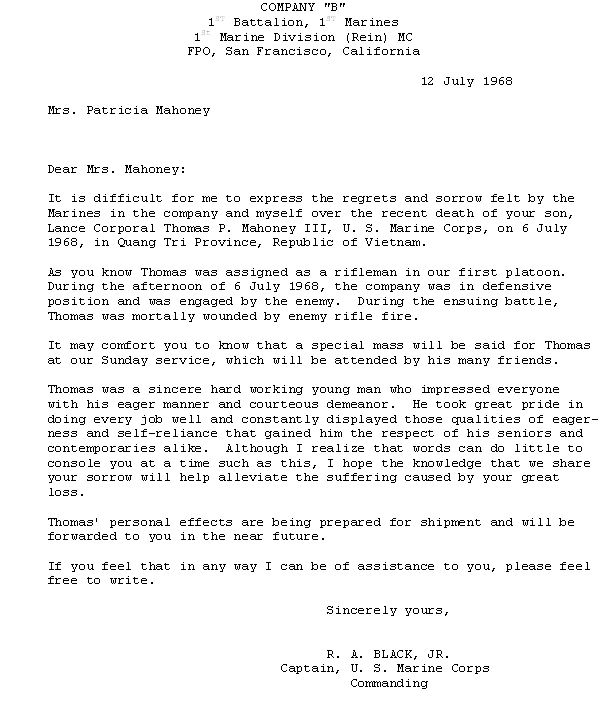
Last Thursday evening, I had the honor of attending a dinner at the United States Military Academy, West Point, to receive a literary award, the Military Order of St. Louis, for my Khe Sanh trilogy, A Patch of Ground, The Long Goodbye and The Gunpowder Prince. The dinner was hosted by the Knights Templar Priory of Saint Patrick in the Hudson Valley of New York, and was attended by many distinguished retired and active members of the military, including several generals.  Past recipients of the award include best-selling writers Thomas Fleming, James Bradley (Flags of Our Fathers) and Philip Caputo (A Rumor of War). Among this year's nominees were several best-selling writers and historians, as well as Pulitzer-winning journalist. I would not have been there except for the efforts of Lieutenant Colonel Robert Black. His contributions, including advancing my nomination, are something for which I will forever be grateful. In 1968, then-Captain Black was commander of a company that included my friend Tom Mahoney. Tom is the subject of my book The Long Goodbye and Captain Black not only oversaw what proved to be a futile effort to retrieve Tom’s body from under a deadly enemy ambush, but later wrote an eloquent and heartfelt letter to Tom’s mom (see below). In the audience were my old Khe Sanh siege buddies Michael Reath and Michael Maier (just to be clear, not everyone at Khe Sanh was named Michael😉). Both New Jerseyites, their escorting of me to West Point was not only greatly appreciated and entertaining (we still, even after all these years, maintain the dark sense of humor we'd developed at Khe Sanh in order to stay sane during the unremitting enemy shelling), but was also vital to my safe arrival there, given the mindboggling level of traffic and bewildering highway system in northern Jersey. This honor, as well as the genuinely warm welcome and humbling respect I enjoyed from my hosts and attendees, will remain a highlight among so many wonderful memories I have collected over the years.


Saturday, October 12, 2019

A Real American Hero


Each afternoon, Disney World in Orlando, Florida randomly selects a veteran from among its visitors to be guest of honor in a daily ceremony to lower the American flag and then to carry it in a parade down Main Street.

Earlier this year they saw a man with his family wearing a hat denoting him as a Vietnam veteran and asked him to be that guest of honor.  His name is Bruce Bird and, in my opinion, they could not have selected a more deserving person.

Fifty-one years ago, on July 6, 1968, during the bitter fighting in the final hours before Khe Sanh Combat Base was abandoned, ending fifteen months of horrendous battle there, Bruce volunteered to risk his life to retrieve the body of my friend Tom Mahoney from under a North Vietnamese Army ambush. Bruce was a veteran of intense combat and so knew full-well the dangers he faced.


As he crawled within a few yards of Tom's body, Bruce was shot through the neck by an enemy sniper. As he lay in the tall grass watching the blood flowing out, he later said “It was like in the movies, with my life flashing before my eyes.” Just as he lost consciousness, platoon leader Lieutenant Frank Ahearn and another Marine pulled Bruce back to safety. A corpsman quickly bandaged his neck wound and managed to get him aboard the next medevac helicopter to a hospital in a rear area.That unusually rapid (and lucky) sequence of events resulted in Bruce’s life being saved.


A few years ago, I tracked Bruce down while I was researching and writing The Long Goodbye: Khe Sanh Revisited, and he provided vital information.

So, its time to finally Stand Down, Marine. Your loyalty and courage echoed across the subsequent decades and in the end--as if somehow fated--you appeared at just the right moment to help ensure that the memory of Tom’s last days will not be left behind in the shadows of history.

If Disney World was looking for a real American hero to lower the flag, they certainly found one that day.


Wednesday, September 25, 2019

The Nevada Historical Society presents “Sinatra in Nevada, Part II” at 5 pm on Wednesday, October 2, 2019

Join Nevada historian and former director of the Nevada Department of Cultural Affairs Michael Fischer as he moderates a discussion about Frank Sinatra’s close personal relationship with Bill Raggio. As Washoe County District Attorney, and later state senator, Raggio’s integrity and reputation as a public servant was held in the highest regard by the public and his legal and legislative colleagues. But, his friendship with fellow Italian-American Sinatra, whose lifelong association with members of organized crime, eventually costing Frank his gaming license at the Cal Neva-Lake Tahoe, raised more than a few eyebrows.  


Sinatra: "Any report that I fraternized with goons or hoodlums is a vicious lie!"  
In this group are murderer-turned-FBI-informant, Jimmy "The Weasel" Fratianno,
 and New York Mafia Bosses, Carlo Gambino and "Big" Paulie Castellano.
Bill socialized with Frank often, and was the first one Sinatra called to help him organize the ransom and recovery when his son Frank Jr. was kidnapped at Lake Tahoe in 1963. In 1981, Sinatra chose Bill Raggio as his private attorney to represent him before the Nevada Gaming Commission in regaining a gaming license.  

Some of the evening’s discussion will address how Raggio walked a fine line in maintaining this friendship, and how much Bill may have known about Sinatra’s involvement with Mafia bosses, a claim Sinatra repeatedly denied throughout his lifetime; but was well-established in FBI files released after his death under the Freedom of Information Act. 

Among those participating in the discussion will be Michael Archer, author of Bill Raggio’s biography A Man of His Word; and highly respected, longtime Nevada journalist, formerly with the Nevada Gaming Control Board, Guy Farmer, who was familiar with the case against Sinatra at the Cal Neva and, at one point, listened in on an obscenity-laced telephone conversation as Sinatra threatened the Board’s director Ed Olson.

It should be a lively and interesting conversation, so come early and check out the wonderful historical exhibits the Society has to offer.

The Nevada Historical Society is located at 1650 N Virginia St, Reno (on the University of Nevada campus). Wine and cheese will be served starting at 5 PM with the discussion beginning at 5:30. A nominal admission fee may be required. For further information please call 775-688-1190.


Saturday, September 14, 2019

Upcoming Literary Award for Khe Sanh Books

I’m pleased to announce that I’ll be travelling next month to the United States Military Academy, West Point, New York to receive the Military Order of St. Louis medal for the Khe Sanh trilogy (A Patch of Ground: Khe Sanh Remembered, The Long Goodbye: Khe Sanh Revisited and The Gunpowder Prince: How Marine Corps Captain Mirza Munir Baig Saved Khe Sanh)  "in recognition of its important contribution to military literature" from the Knights Templar Hudson Valley Priory of Saint Patrick. 
Past recipients include bestselling writers Thomas Fleming, James Bradley (Flags of Our Fathers) and Philip Caputo (A Rumor of War). This year’s candidates included several best-selling writers and historians and a Pulitzer prize-winning journalist. As such, I am deeply honored by the selection and looking forward to the award dinner at the West Point Club on October 17, 2019
The event is not open to the walk-in public; however, if you wish to attend as my guest, preregistration is required. For information about cost of the dinner, attire, time and directions, etc., please contact LtCol (Ret) Robert Black at RBlack.RBC@Carroll.com. Those of you who have read A Patch of Ground and/or The Long Goodbye may recall then-Captain Black was Tom Mahoney’s company commander with the First Battalion, First Marines during those final harrowing days of Khe Sanh. Signed copies of The Gunpowder Prince will be available via preorder through LtCol Black. 
I will also be speaking about the battle of Khe Sanh on October 16, 2019, 2-4 pm, at American Legion #25 hall, 4 JFK Drive, Milltown, NJ (near the Rutgers University campus).  Signed copies of all my Khe Sanh books will be available. This event is open to the public. 
Between this Military Order of St. Louis, and The Gunpowder Prince having been recipient, last April, of the Marine Corps Heritage Foundation’s 2019 Colonel Joseph Alexander Award for distinguished biography, it’s been a very good year for recognition of the gravity of what Americans and their adversaries on the Khe Sanh battlefield endured, accomplished, lost and now continue to live with, over fifty years after that longest and costliest pitched battle of the Vietnam War. 

Saturday, July 6, 2019

Always Faithful


Today marks the 51st anniversary of the death of Lance Corporal Thomas P. Mahoney III due to hostile fire on Hill 881 South near Khe Sanh Combat Base. It is not only fitting to remember the sacrifice Tommy made, but also of  those in his platoon who volunteered to risk their own lives to retreive him. These included Lieutenant Frank Ahearn, Privates First Class Bruce Bird, Richard Delucie, Wayne Sherwin, Richard Patten and Lance Corporal Allen V. Williams. (Bird, Delucie and Williams were wounded in the effort.)   This story of their bravery is told in The Long Goodbye: Khe Sanh Revisited. Although I was not able to locate Delucie, Sherwin and Patten, I did find Ahearn, Bird and Williams (for more information about the extraordinary  life of recently deceased Allen Williams please see my previous post). It has been one of the great honors of my life to have known men of such loyalty and courage.


On another note, I recently received this link https://www.youtube.com/watch?v=Nk0jEczjZ70 to a video of the 2019 Marine Corps Heritage Foundation Awards dinner last April.  Major General Kessler graciously introduced me (in absentia) and The Gunpowder Prince at about 15:20 in.  It was a beautiful ceremony; however, what made me regret—even more—not having been able to attend, were the back-to-back, jaw-dropping, speeches given by two former Commandants of the Marine Corps, Generals Dunford and Neller (General Dunford also having held the highest position in the U.S. military as Chair of the Joint Chiefs of Staff). Both men are in the process of retiring and so these remarks were their career swansongs. The first begins about 56 minutes in. No Marine, or former Marine, should miss listening to their incredibly poignant, stirring, yet incisive, messages. 


What I found personally touching was the way both men spoke about first coming into the Marine Corps just as the Vietnam War was ending with a victory by our adversary, and having to help rebuild that decimated and demoralized organization. Each spoke of the nucleus of battle-wise Vietnam War vets who chose to stay in the service (despite varying degrees of bitterness and disappointment at how the war had played out). Both men credited this loyal cadre of both commissioned and staff non-commissioned officers with having helped them avoid too many (what General Neller drolly referred to as) “lieutenant things,” and to grasp the enormity of  the task they faced---made particularly difficult due to  transitioning into an all-volunteer military---in order to keep alive the traditions, reputation and high standards of the Marine Corps. The significance of this “torch passing” in those dark years following the fall of Saigon has been too often overlooked. 

Listening to them reflect on their careers, and the challenges they overcame, has left me with profound gratitude that, out of the crucible of Vietnam and a shaky postwar America, these wise, evenhanded and very human leaders were there to protect us through such perilous times.


Sunday, April 14, 2019

Allen V. Williams


UPDATE: 

Allen Williams died on May 28, 2019  

after a long battle with Alzheimer’s 


Corporal Allen V. Williams, was one of the five Marines who stepped up on the afternoon of July 6, 1968  when Lieutenant  Frank Ahearn asked for volunteers to risk their lives by moving down slope into an intense enemy ambush on the already infamous Hill 881 South to recover the body of my friend Lance Corporal Tom Mahoney, killed just minutes before (the others being Privates First Class Bruce Bird, Richard Delucie, Wayne Sherwin and Richard Patten). The attempt proved unsuccessful, but not before Williams, Bird and Delucie were seriously wounded in the effort and subsequently medevac’d to a field hospital.

Allen Victor Lee Williams III was born the son of a respected New York City psychiatrist and had educational and professional opportunities beyond the reach of most young Americans. Despite this, he joined the Marines as an enlisted man in 1967 to serve his country as a rifleman.  However, Allen was not a typical “grunt.” During his time in Vietnam, he often told his fellow Marines how he was going to be actor after returning to civilian life. Because of his engaging personality and sense of humor, he was well-liked in his platoon. Due to a knack for voice impersonations, he was regularly asked to read suspenseful paperback books for the entertainment of his buddies. One told me years later how Allen’s Vincent Price imitation, while doing horror stories, sent chills down the spines of his listeners. His platoon commander, Lieutenant Ahearn, would later say of him: “Williams was a fine Marine, a good person and very good for the morale of the unit.”

I contacted Allen in 2010 while researching The Long Goodbye, and was surprised at how deeply Tom’s death had affected him. “Tom was my best friend in the Corps,” Allen said. “A day never goes by that I don’t think of him. I tried once to find his folks, but I stopped myself because I thought it would just make the pain worse. I suppose his people are gone by now. The whole experience at Khe Sanh and on the hills was awful. For a long time, I thought of trying to talk to someone about it, but for the most part, I just buried it in some deep part of my heart.”

On the day in late 1968 when he was finally discharged from Saint Albans Naval Hospital in Queens, Allen took the subway home. He was in uniform and, despite the train car being crowded at the time, he vividly recalled how “passengers literally (physically) pressed against one another to move away from me, as if I were a leper.” It was, Allen added, “due to that ridiculous ‘baby killer’ stigma now borne by all Vietnam vets.” After his discharge from the military, Allen stayed true to his dream of becoming an actor and went on to have a long, successful career in film and television, with roles in significant television shows throughout the next four decades, (see for yourself at www.imdb.com/name/nm0930006/).


 He was a regular cast member in such acclaimed series’ as The Lou Grant Show, Knott’s Landing and The Client, and numerous major films, including Being There and Against All OddsIronically, in the 2012 film Project 12, Allen was cast as President Lyndon Johnson—the president who had sent us to Vietnam.  However, for many years he never mentioned his Vietnam service. “If I had,” Allen said, “I would have been blacklisted.”


His final role was in the 2018 film The LandlordYet, the curtain came very close to coming down on his “final role” fifty years earlier at age twenty while playing the very real part of a loyal and courageous friend who was willing to die rather than leave Tommy behind on that hill. It is not hard to guess why Allen Williams is one of the most extraordinary individuals I have ever had the pleasure to know. In recent years, Allen’s battle with Alzheimer’s Disease has not only ended his career and destroyed a once brilliant mind, but stolen from his family and friends the pleasure of being in the company of a remarkably sincere, compassionate and interesting person.

I spoke to his daughter Carrie Williams recently and learned that Allen’s health is declining rapidly.  I reminded her of how Allen and I had so appreciated the eloquent and heartfelt message she’d sent us on Veterans Day 2010; and this, in turn, reminded me how important it is to not put off telling those you care about how you feel:

“I wish you had never had to endure the tragedy and turmoil of war, or had to grow up too fast, or lose your best friends in combat. I could never understand where you have been. I can only be grateful for the impact you both have made on my life. Thank you for your service to our country, for your love of each other, and the example you set for the next generation. The only real men I have known were Marines.”  


Sunday, December 2, 2018

President George H.W. Bush and some "larceny" on Air Force One.


President George H.W. Bush is known to have been a decent, witty and down-to-earth person. Thanks to the late Senator Bill Raggio, I was able to record one of the more amusing, and lesser-known, Nevada connections the President made while in office, as described here in an excerpt from my 2011 book  A Man of Word: The Life & Times of Nevada’s Senator William J Raggio.  

*****

On August 6, 1992, President Bush addressed the nearly two thousand American Legislative Exchange Council (ALEC) members in attendance at the Broadmoor Hotel in Colorado Springs. After thanking outgoing National Chair, Fred Noye for the introduction, the President said,

“You have done a great chairman’s job and I know that your shoes will be ably filled by Bill Raggio, over here, from the state of Nevada. Bill flew in with us last night from Reno on Air Force One, and all the White House stationery and matchboxes from the plane are missing.  But he swears there’s no correlation whatsoever.”

In a 2008 interview, Bill Raggio described that flight:

“I met the President here in Reno and, as National Chair, I was invited to leave with him and fly to Colorado Springs for the ALEC national meeting. It was an interesting flight.  After getting a tour of the airplane’s interior, the President invited me to sit with him in his private compartment. A pair of bedroom slippers with the Presidential Seal on them caught my eye. I thought, at the time, how unique it would be to own them. Later, when President Bush accused me in his speech of petty larceny for taking everything I could find bearing a Presidential Seal, I was almost sorry I hadn’t taken those slippers, too.”

In November 1992, after President Bush’s term of office ended, Bill Raggio, still the National Chair of ALEC, nominated the former President to receive the organization's highest honor, the Thomas Jefferson Freedom Award.

As Raggio recalled later:

“There was some feeling, some resistance, in ALEC that Bush had not been conservative enough when he was President. They held that against him and did not think he should receive the Jefferson Award. I felt very strongly that he should be honored and that he had been an outstanding President in difficult times and so should be given the Award.”

Bill swayed a majority to his point of view, and joined several other ALEC board members in going to Houston and personally presenting the award to the former President.

Bill was delighted by the reception they received:

“He took time with us, at least an hour, and showed us around the office and the memorabilia that he had been given when he was President. We had a good general discussion about ALEC, and ALEC principles and where the country was going.  He was cordial and very gracious and pleased to have received it.”


Senator Bill Raggio

   Senator Bill Raggio, Nevada State Senate Majority Leader                                             Thirteen years ago , in November 2...

WELCOME!